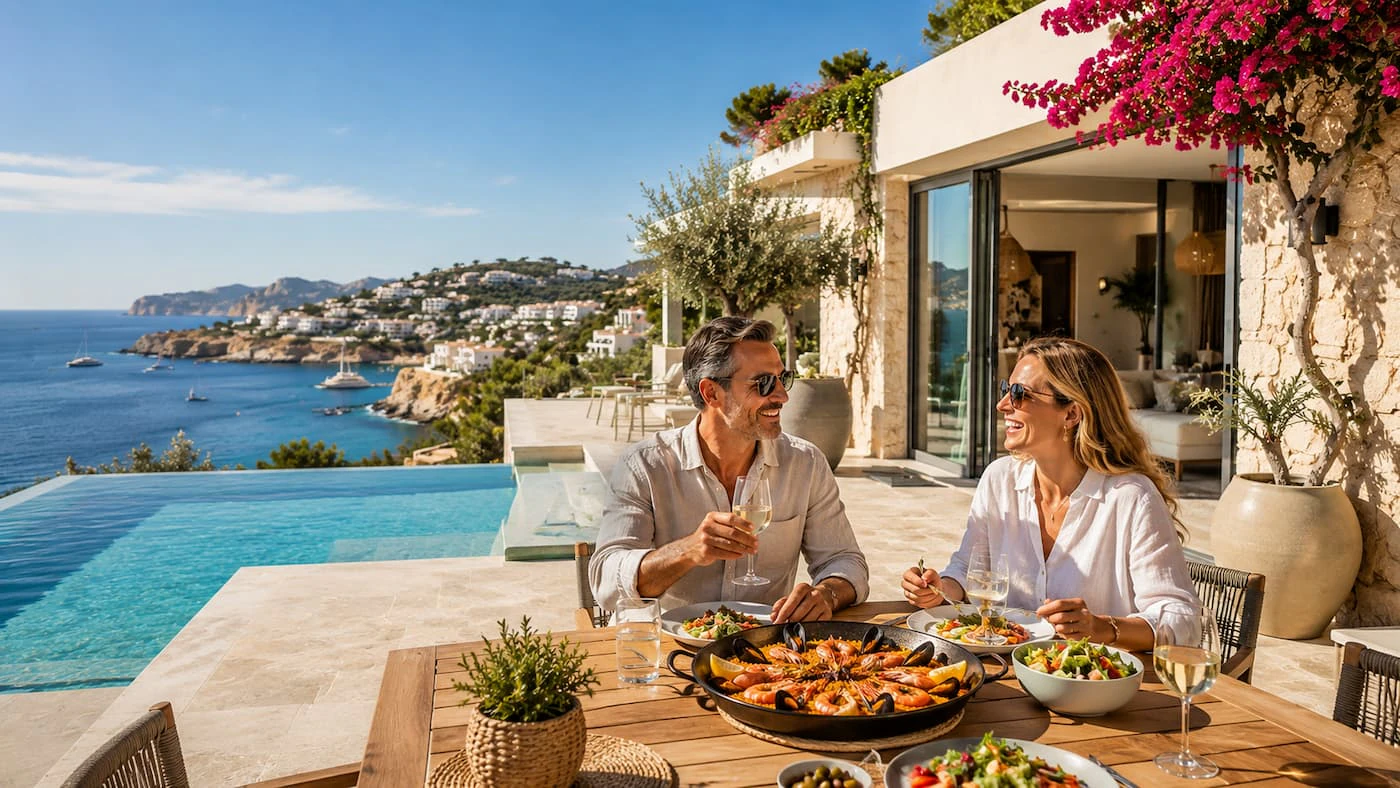
Where in Spain do you get the best quality of life? Climate, safety, and housing under the microscope
Choosing the ideal place to live or invest is not a decision to be taken lightly. When we ask which part of Spain offers the best quality of life, the answer doesn’t depend on a single factor, but on a delicate balance. We look for a microclimate that eases stress, environments with minimal crime rates, a reasonable cost of housing, and that much-coveted Mediterranean lifestyle.
The latest Quality of Life Index by Numbeo places Spain firmly in the world’s Top 20 for quality of life. However, Spain’s geography is diverse: while the north stands out for its public services and green spaces, and major capitals for their work dynamism, there is one region that strikes the perfect balance between real estate investment, year-round sunshine, and wellbeing—the Costa Blanca.
Next, we objectively analyze how climate, safety, the housing market, and day-to-day life interact to reveal the definitive corner in which to live fully.
The 4 pillars of quality of life in Spain
To determine with precision which region offers the greatest wellbeing, we need to cross-reference the technical data from the four factors that most affect your daily life and your budget.
1. The Climate: Beyond sunny days
Climate doesn’t just influence leisure; it directly affects health and energy savings. While the northern part of the peninsula endures long winters and constant precipitation, and the interior experiences extreme temperatures (the famous “continental climate”), the Mediterranean coastline offers a unique ecosystem.
The World Health Organization (WHO) has repeatedly highlighted the microclimate of the Costa Blanca (particularly the area surrounding Alicante, Jávea, Altea, and Moraira) as one of the healthiest in the world. With more than 320 sunny days a year and an average annual temperature of 19°C, it enables an active outdoor lifestyle across all four seasons.
2. Public safety and healthcare infrastructure
Spain is one of the safest countries in Europe. However, the picture changes between bustling metropolitan areas and medium-sized or residential municipalities.
Coastal communities in the province of Alicante show crime rates that are notably low compared with mass tourist hubs. Added to this is top-tier medical infrastructure, combining hospitals from the public Health network with prestigious international hospital centers.
3. The Housing Market: Real value per square meter
Property prices are the factor that usually tips the scales. Cities like Madrid, Barcelona, or San Sebastián show a strained residential market, where the cost per square meter drastically reduces your real purchasing power.
In today’s residential market, the buyer profile—especially premium clients and international teleworkers—looks for what economists call “lifestyle assets”. In practice, that means prioritizing homes with private plots, high energy efficiency, terraces, and open views. Regions such as the north of the Costa Blanca offer an exceptional price-to-quality ratio in the luxury villa segment and in independent chalets when compared with the Balearic Islands or the Costa del Sol.
4. Lifestyle and everyday wellbeing
Work-life balance, cuisine based on local produce, proximity to the sea, and low noise pollution define true contemporary luxury. The Mediterranean pace of life is no myth; it’s an urban structure designed for wellbeing, with efficient connections to international airports (like El Altet in Alicante) that make global mobility easier.
The verdict: Why does the Costa Blanca top the wellbeing ranking?
If we combine the variables of a perfect climate, guaranteed safety, competitive property prices in the residential sector, and an enviable natural setting, the North Costa Blanca emerges as the area with the overall best quality of life in Spain.
Specifically, towns such as Altea, Moraira, Benissa, and Jávea offer a unique refuge for the following reasons:
Protected geographic setting: The proximity of the mountains of the Marina Alta shields the region from cold winds, keeping winters mild and summers tempered by the sea breeze.
Solid real estate investment: Unlike the rental bubbles of big cities, buying a property here represents a safe-haven value. Demand for both holiday rentals and long-term residential leases ensures high profitability.
Integrated international community: A significant portion of the population is of European origin, which has led to the creation of international schools, bilingual services, and a cosmopolitan cultural life throughout the year—avoiding the “ghost city” effect in winter.
Regional comparison: Where in Spain is it best to live?
To understand the Costa Blanca’s position, let’s see how it stacks up against the other major residential options in the country:
Region / Area | Climate and Sun | Safety | Cost / Access to Housing | Connectivity and Leisure |
North Costa Blanca | Excellent (320 sunny days) | Very High (Residential areas) | Balanced (Excellent luxury €/m² ratio) | High (Airports and motorways) |
Major Capitals (Madrid/BCN) | Continental / Variable | Medium (Big-city problems) | Very Expensive (Tight market) | Excellent (Cultural and business hub) |
Northern Peninsula (Galicia/Asturias) | Rainy / Cold winters | High | Affordable (Except capitals) | Moderate |
Balearic Islands | Excellent | High | Very Expensive (Land scarcity) | High (Seasonal) |
Expert note: Northern Spain offers very competitive property prices and superb green surroundings, but it penalizes hours of sunshine and winter temperatures. On the other hand, the Balearic Islands offer the climate, but their housing prices are double those of the Levantine coast due to the islands’ limited land area.
Conclusion: Your next step toward a better life
Determining which place in Spain offers the best quality of life isn’t just a matter of statistics; it’s a decision about how you want your day-to-day life to look. If you prioritize waking up to sea views, enjoying healthy cuisine, living in a safe environment, and making a smart property investment, the Alicante coastline is the definitive answer.
To explore the best opportunities in the premium real estate market and find the residence that will raise your standard of living, we invite you to discover the exclusive catalogue of properties at Premium Villas Costa Blanca, where experience and local knowledge come together to help safeguard your investment.